A useful collection
A research catalog, a product list, or a table that translates your terminology into someone else’s. Share the fields you choose.
Let someone look up information or run a useful task. Choose what they can use, review it with your AI assistant, and share a link.
Public beta · Try it in your browser without signup or installation.

Run multi-silo Flower (flwr) and NVIDIA FLARE (nvflare) training rounds, vertical PSI + SplitNN, or distributed map-reduce over OMOP CDM v5.4, HL7 FHIR R4, and Financial AML cohorts—without opening inbound firewall ports or exporting sensitive rows.
SecAgg masking and per-sample DP-SGD.service_code_hash) for Logistic, MLP, or LoRA adapters and enforces a persistent, hash-chained Rényi DP (RDP) budget ledger with Merkle cohort commitments.MultiKrum / TrimmedMean filtering with Shapley value (φ_k) Lightning settlement gating.Check cohort counts, compute global normalization across OMOP / FHIR / AML schemas, or intersect entity IDs via blinded HMAC-SHA256 PSI with zero raw rows exposed.
Dispatch Logistic, MLP, LoRA, or vertical SplitNN steps via turnkey froglet_fl adapters with pairwise SecAgg and RDP budget enforcement.
Verify every 5-artifact receipt chain offline, reject Byzantine gradients via MultiKrum, and gate Lightning HTLC settlement on positive Shapley value (φ_k > 0).
 01 / Choose
Bob asks his assistant to prepare a useful part of his work. Only the selected data goes into the shared copy.
 02 / Review
Bob sees what is included, what is left out, and an example result. He approves before anything is published.
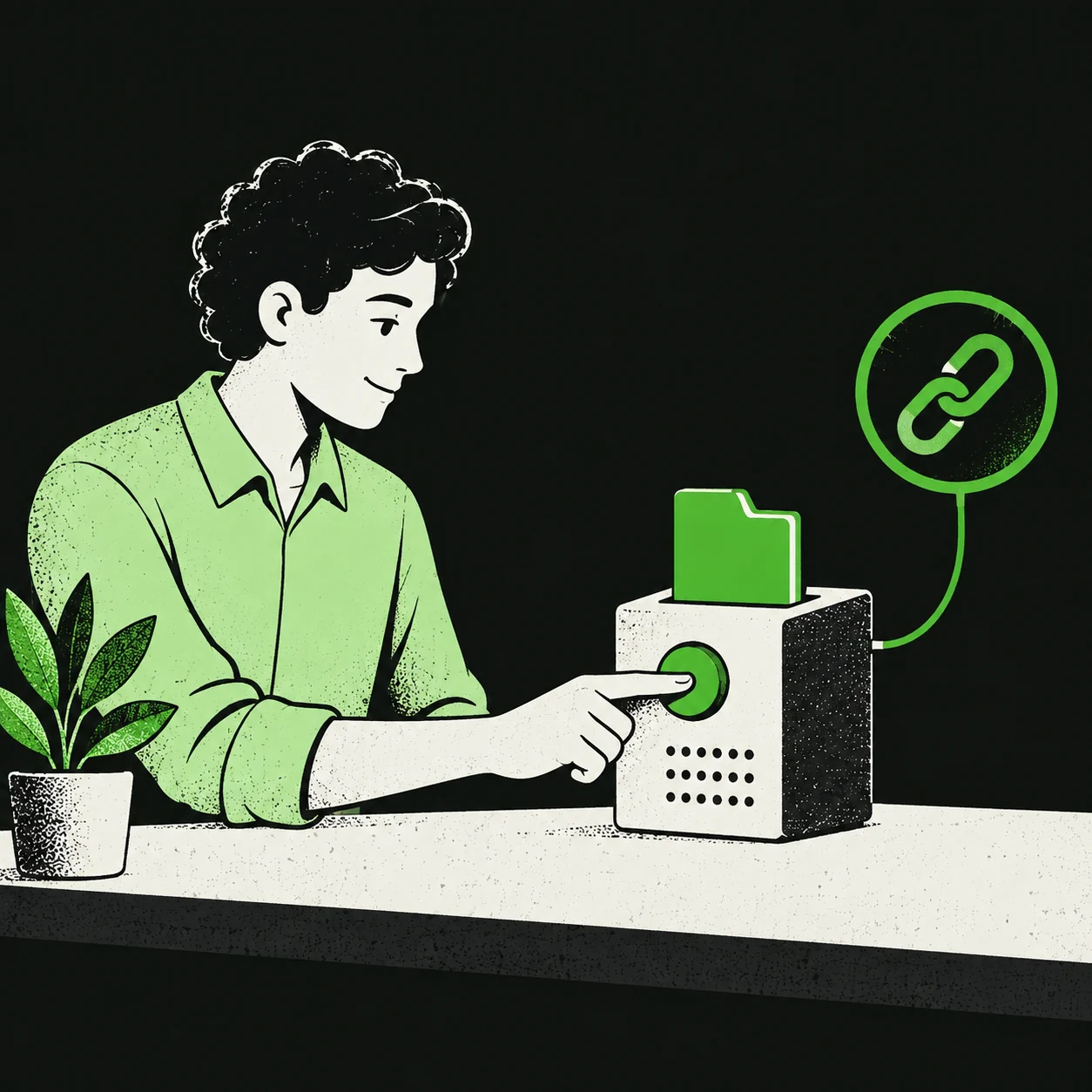 03 / Share
Alice’s assistant reads what the service does and helps her decide whether to use it. Invitation access, when required, is sent separately.
A shared result can be kept by its recipient. Stopping access prevents new work; it cannot recall a result already delivered.

Agree what can be shared, who can use it, and under which conditions.
Our direction is to turn those decisions into a working service. Today, Froglet provides selected data sharing, cross-silo federated learning, invitations, execution limits, and signed records. Broader contract and SLA automation is still ahead.
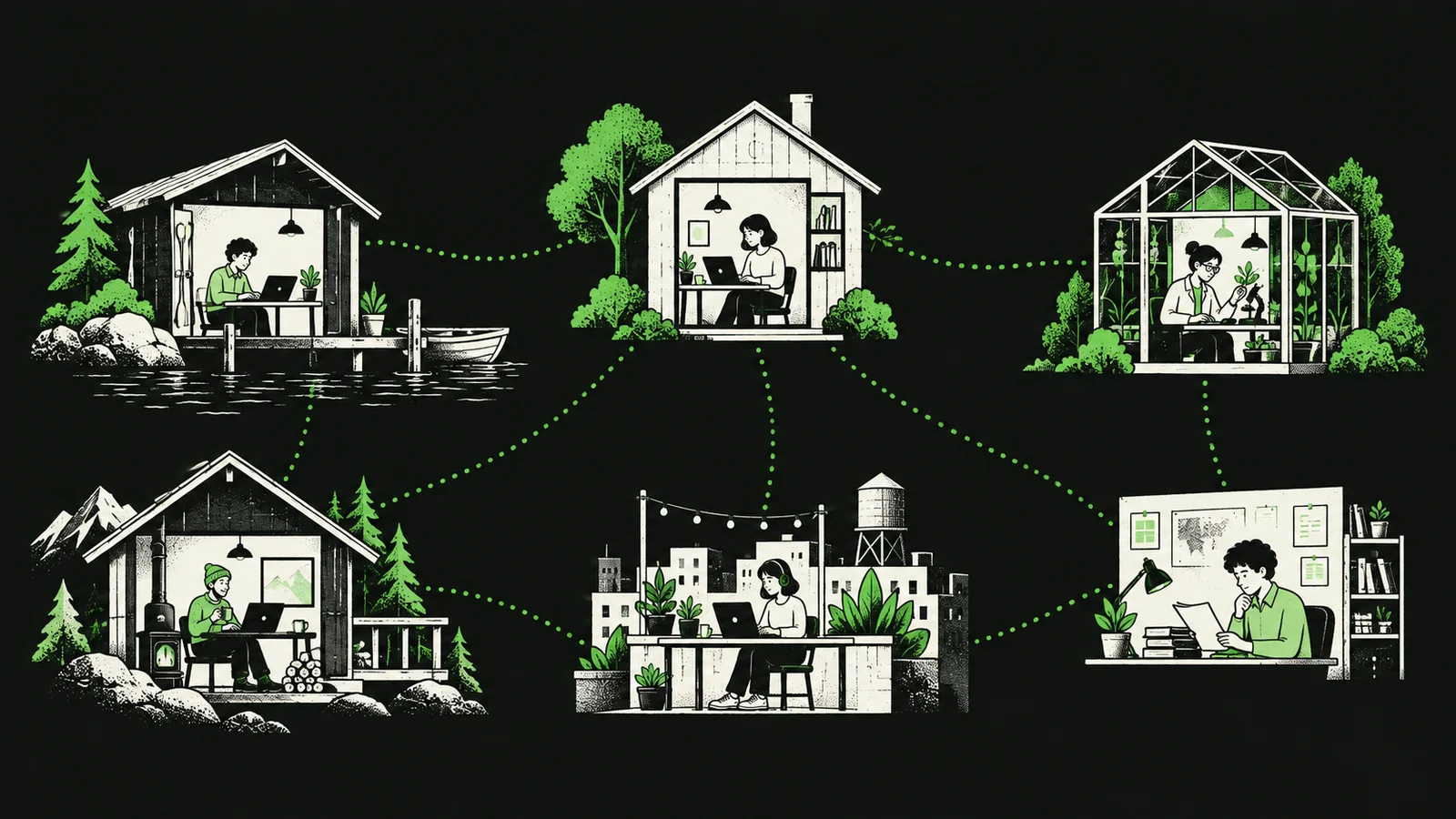
That is a useful starting point. Froglet shares a service: something another person’s assistant can query or run. You host it on a computer you control. It is not a hosted file-storage account, and there is no drag-and-drop web workspace today.
Each organization runs its own Froglet Node over its local dataset (such as an OMOP CDM, HL7 FHIR R4, or Financial AML cohort) and exposes a locked WebAssembly training service (fl.train_step.v1) and map-reduce service (compute.mapreduce_shard.v1). A coordinator using Flower, NVIDIA FLARE, or the froglet_fl SDK dispatches global weights to each silo, enforces Rényi DP privacy budgets and pairwise SecAgg masking inside Wasm, receives only updated weights and BIP-340 Schnorr-signed execution receipts, and aggregates them with FedAvg, MultiKrum, and Shapley value attribution. Read the Federated Learning & Compute guide.
For a small data catalog, your assistant can help prepare it. Today you use a file-capable assistant such as Codex or Claude Code on Apple Silicon macOS or Linux. Installation and publishing still require your review. Connecting an existing system or setting up invitations needs more technical configuration.
You choose the data included in the service. Public services are accessible to others; invited services need a separate access credential. A service’s description, example, and selected package information may still be public. Keep confidential data and credentials out of that material.
Invitations currently cover the services on one Froglet host. Use separate hosts when different recipients should have different access. Read the access guide.
Paid services are part of the vision, and payment integrations exist with different levels of maturity. The guided publishing journey starts free. It is not yet a ready-to-use sales and billing service. See payment integration status.
Yes, if you choose to offer bounded computation. Alice can supply a compatible WebAssembly program and input; Bob’s Froglet Node runs it with agreed memory, time, and execution limits. The native agent tool supports this, with an optional A2A connection between configured Nodes.
The repeatable demo uses two local Nodes and free jobs. Public setup and real payments need further qualification. This does not let arbitrary programs use your files or network. See the working flow and its limits.
On your computer or infrastructure. That machine needs to stay awake, online, and running Froglet. Managed always-on hosting is not available yet. This is a public beta; clean-machine and first-time-user qualification are still pending.
It can apply supported technical controls, such as selected data, invitation access, and execution limits. Signed records make an exchange inspectable. They do not establish that a result is correct or automatically enforce legal terms, data-use promises, or an uptime SLA.
One catalog. One lookup. One useful calculation.